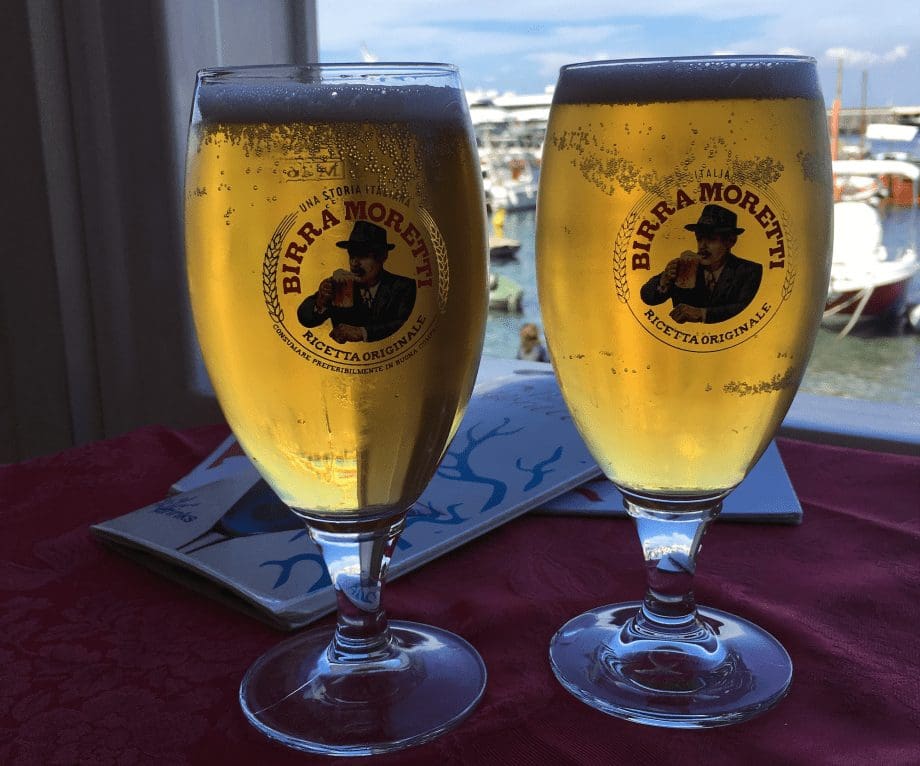
Zwei Bier

Professorenweisheit 5 (3)

Beitragsfoto: zwei Bier

Diese untenstehende Geschichte stammt aus den Tiefen des World Wide Web und hatte sofort meine gesamte Aufmerksamkeit. Leider wurde auch hier kein Autor genannt.

Diese Geschichte ist kurz, prägnant und verständlich. Deswegen bemühe ich mich auch, dem Fazit dieser Geschichte stets gerecht zu werden.

There is always room for …

A professor stood before his philosophy class and had some items in front of him. When the class began, he wordlessly picked up a very large and empty mayonnaise jar and proceeded to fill it with golf balls.

He then asked the students if the jar was full. They agreed that it was. 

The professor then picked up a box of pebbles and poured them into the jar. He shook the jar lightly. The pebbles rolled into the open areas between the golf balls. He then asked the students again if the jar was full. They agreed it was.

The professor next picked up a box of sand and poured it into the jar. Of course, the sand filled up everything else. He asked once more if the jar was full. The students responded with a unanimous “yes”.

The professor then produced two beers from under the table and poured the entire contents into the jar effectively filling the empty space between the sand. The students laughed.

“Now”, said the professor as the laughter subsided, “I want you to recognize that this jar represents your life. The golf balls are the important things – your family, your children, your health, your friends and your favorite passions – and if everything else was lost and only they remained, your life would still be full. The pebbles are the other things that matter like your job, your house and your car. The sand is everything else – the small stuff.”

“If you put the sand into the jar first”, he continued, “there is no room for the pebbles or the golf balls. The same goes for life. If you spend all your time and energy on the small stuff you will never have room for the things that are important to you. Pay attention to the things that are critical to your happiness. Spend time with your children. Spend time with your parents. Visit with grandparents. Take your spouse out to dinner. Play another 18. There will always be time to clean the house and mow the lawn. Take care of the golf balls first – the things that really matter. Set your priorities. The rest is just sand.”

One of the students raised her hand and inquired what the beer represented.

The professor smiled and said, “I’m glad you asked. The beer just shows you that no matter how full your life may seem, there’s always room for a couple of beers with a friend.”

„I had imaginary friends and even they were mean to me.“

Olivia Wilde als Jane in The Incredible Burt Wonderstone (2013)

Workaholic

Workaholics 4 (8)

Beitragsfoto: Workaholic | © Shutterstock

Nachdem ich festgestellt hatte, dass ein vermeintliches Gedicht Rainer Maria Rilkes, welches seit ein paar Jahren im Internet zirkuliert, tatsächlich von Lars van Rome ist, habe ich mir sofort seinen Gedichtband gekauft. Van Romes Gedichte sind frisch aus dem Leben heraus geschrieben und decken ein paar Jahrzehnte Lebensgeschichte ab – so fällt es dem Zeitgenossen leicht, schnell in eigenen Erinnerungen zu schwelgen. Alles in allem ein Gedichtband, den man immer wieder gerne zur Hand nimmt und der auch beim wiederholten Lesen für Überraschungen gut ist.

Workaholics

Mit Arbeit ist das so auf Erden:
sie kann sehr schnell zum Laster werden!
Du kennst die Blumen nicht die duften,
du kannst nur arbeiten und schuften!

So geh’n sie hin, die schönsten Jahre,
bis endlich liegst du auf der Bahre,
und hinter dir, da grinst der Tod:
„Kaputtmalocht, du Vollidiot!“

Lars van Rome

Lars van Rome hat das Gedicht nach eigenen Angaben bereits 1979-1980 verfasst, sein entsprechendes Manuskript stammt allerdings erst aus dem Jahre 1991.

Sollte Ihnen dieses Gedicht Lust auf mehr machen, dann freut sich van Rome bestimmt, wenn Sie seinen Gedichtband Unfeine Gesellschaft, in dem auch das obige Gedicht enthalten ist, kaufen.

Ich hatte das Gedicht auch auf einer anderen Website in einer von mir gepflegten Gedichtsammlung veröffentlicht, dort war es von 2014 bis 2017 das am meisten gelesene Gedicht der Sammlung.

„I suppose I have a really loose interpretation of ‚work‘ because I think that just being alive is so much work at something you don’t always want to do. Being born is like being kidnapped. And then sold into slavery. People are working every minute. The machinery is always going. Even when you sleep.“

Andy Warhol, The Philosophy of Andy Warhol (1977: 96)

Schimpanse

Problem thinker 5 (8)

Beitragsfoto: Schimpanse | © Pixabay

Über die nun folgende Frage stieß ich bereits vor ein paar Jahren im World Wide Web, und die dazu als Antwort beigelegte Kurzgeschichte gefiel mir so sehr, dass ich sie mit auf eine meiner eigenen Websites nahm. Leider blieb mir auch hier der Autor dieses Beitrags bis heute unbekannt.

Are you a problem thinker?

It started out innocently enough. I began to think at parties now and then to loosen up. Inevitably though, one thought led to another, and soon I was more than just a social thinker.

I began to think alone. “To relax,” I told myself. But I knew it wasn’t true. Thinking became more and more important to me, and finally I was thinking all the time.

I began to think on the job. I knew that thinking and employment don’t mix, but I couldn’t stop myself.

I began to avoid friends at lunchtime so I could read Thoreau and Kafka. I would return to the office dizzied and confused, asking, “What is it exactly we are doing here?”

Things weren’t going so great at home either. One evening I had turned off the TV and asked my wife about the meaning of life.  She spent that night at her mother’s.

I soon had a reputation as a heavy thinker. One day the boss called me in. He said, “Henry, I like you, and it hurts me to say this, but your thinking has become a real problem. If you don’t stop thinking on the job, you’ll have to find another job.” This gave me a lot to think about.

I came home early after my conversation with the boss. “Honey,” I confessed, “I’ve been thinking …”

“I know you’ve been thinking,” she said, “and I want a divorce!”

“But honey, surely it’s not that serious.”

“It is serious,” she said, lower lip aquiver. “You think as much as college professors, and college professors don’t make any money, so if you keep on thinking we won’t have any money!”

“That’s a faulty syllogism,” I said impatiently, and she began to cry. I’d had enough. “I’m going to the library,” I snarled as I stomped out the door.

I headed for the library, in the mood for some Nietzsche, with NPR on the radio. I roared into the parking lot and ran up to the big glass doors … they didn’t open. The library was closed.

To this day, I believe that a Higher Power was looking out for me that night.

As I sank to the ground clawing at the unfeeling glass, whimpering for Zarathustra, a poster caught my eye.

“Friend, is heavy thinking ruining your life?” it asked. You probably recognise that line. It comes from the standard Thinker’s Anonymous poster.

Which is why I am what I am today: a recovering thinker. I never miss a TA meeting. At each meeting we watch a non-educational video; last week it was “An Inconvenient Truth”. Then we share experiences about how we avoided thinking since the last meeting.

I still have my job, and things are a lot better at home. Life just seemed … easier, somehow, as soon as I stopped thinking.

„Alle Würde des Menschen besteht im Denken …
All seine Pflicht ist richtig zu denken.“

Blaise Pascal, Pensées (1670)